A detailed transformation
Three angles. One beautiful bay.
Drag the line to compare the same south-facing bay. An illustrative study — not a named customer job.
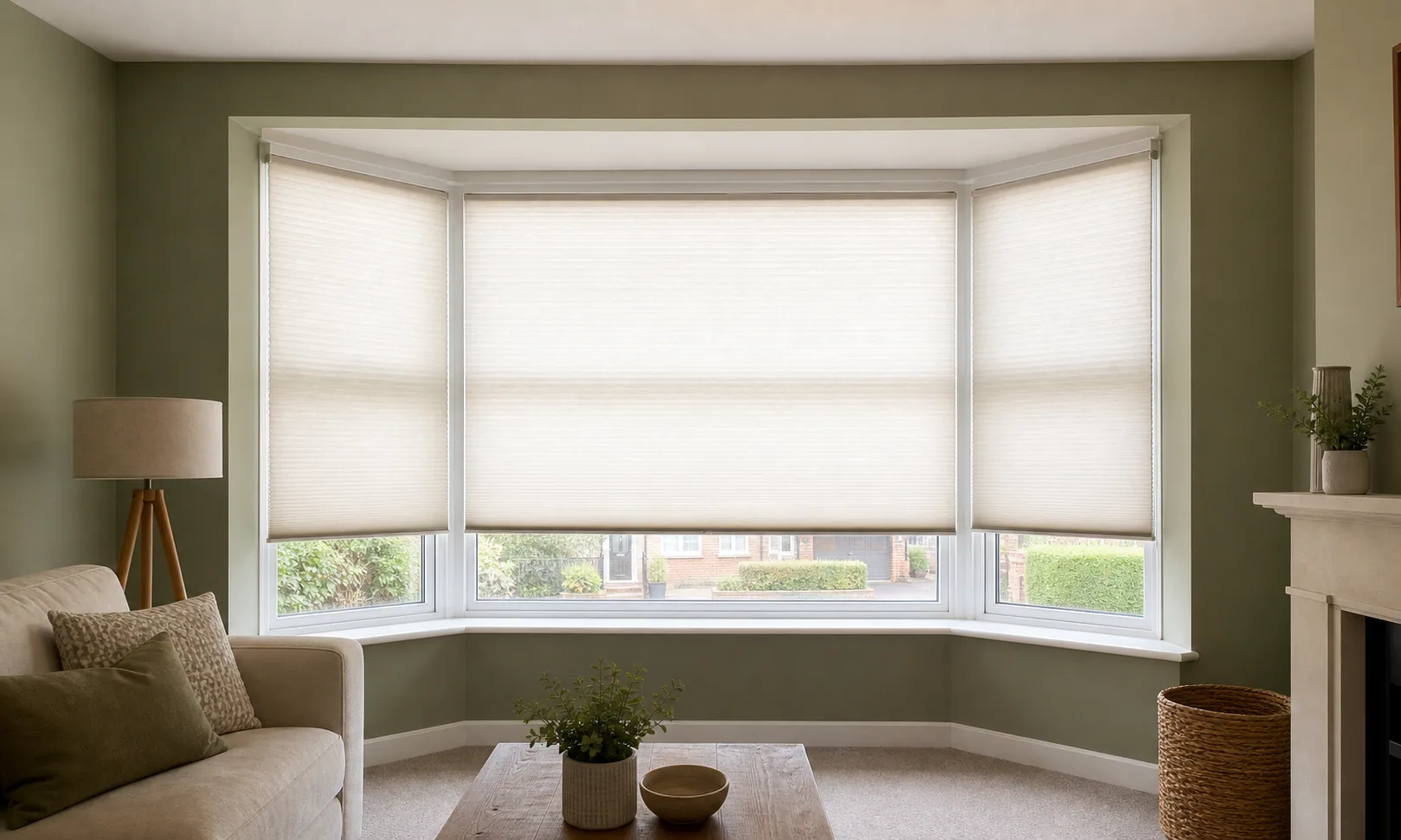
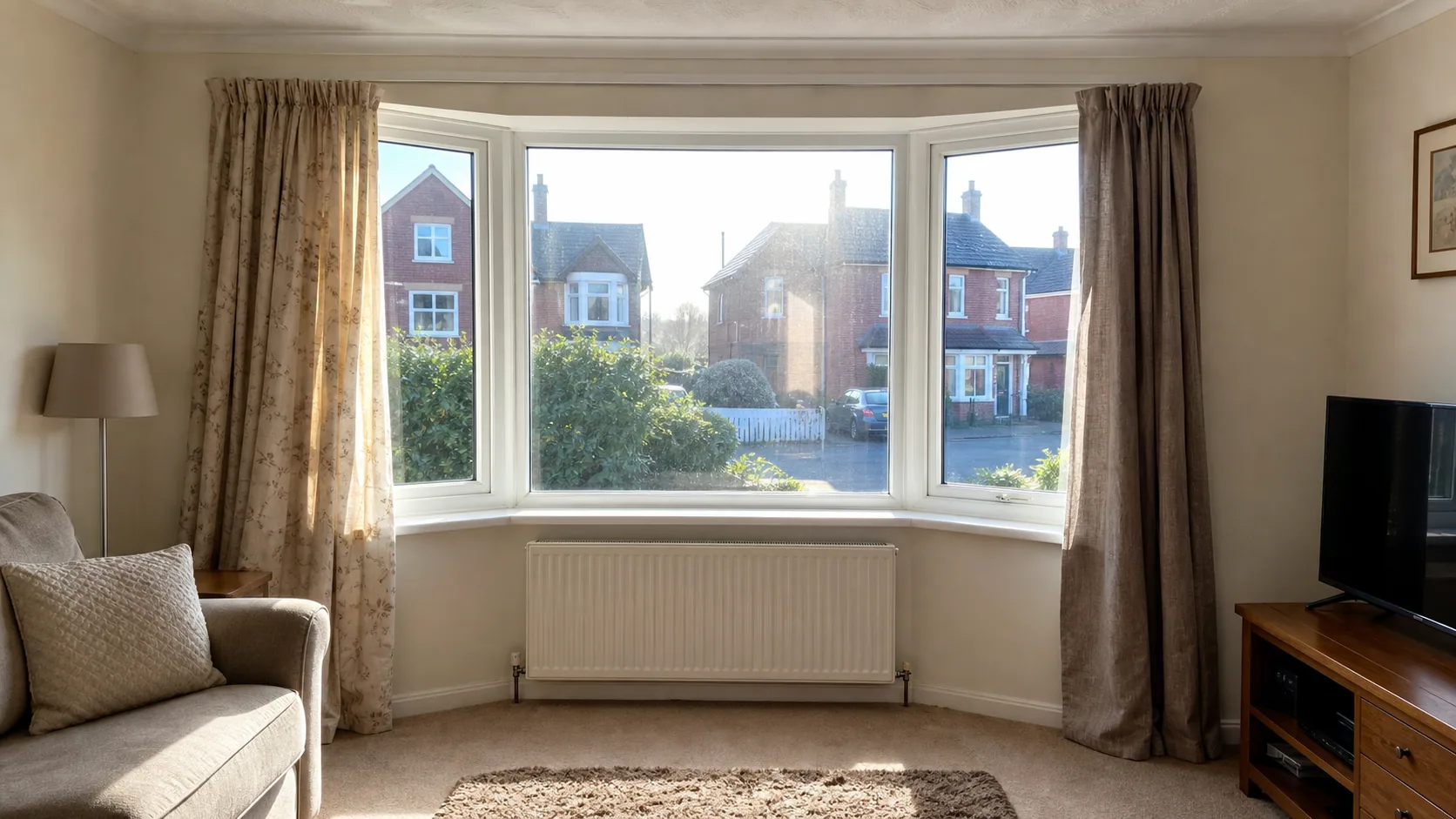
Drag to compare the same bay before and after.
Orientation
South-facing
Opening
Three-sided bay
System
Honeycomb
Objective
Privacy + softer light
The Challenge
Plenty of Light. Not Enough Control.
Harsh afternoon glare, exposed street-level glass and curtains bunching at the corners made the whole bay feel unresolved.
Light
Soften glare without turning the room gloomy.
Geometry
Respect three angles, handles and narrow corner clearances.
Everyday use
Keep privacy flexible and controls discreet.
The Geometry
Corners Are Where a Bay Succeeds or Fails
Each headrail needs its own clear path. We establish a common front line, check handle projection and calculate where neighbouring systems can meet without competing for the same space.
- Individual reveal measurements
- Corner intersection checks
- One consistent headrail datum
- Outer-edge control positions
Plan · not to scale
Three independent headrails · two corner intersections
The Product
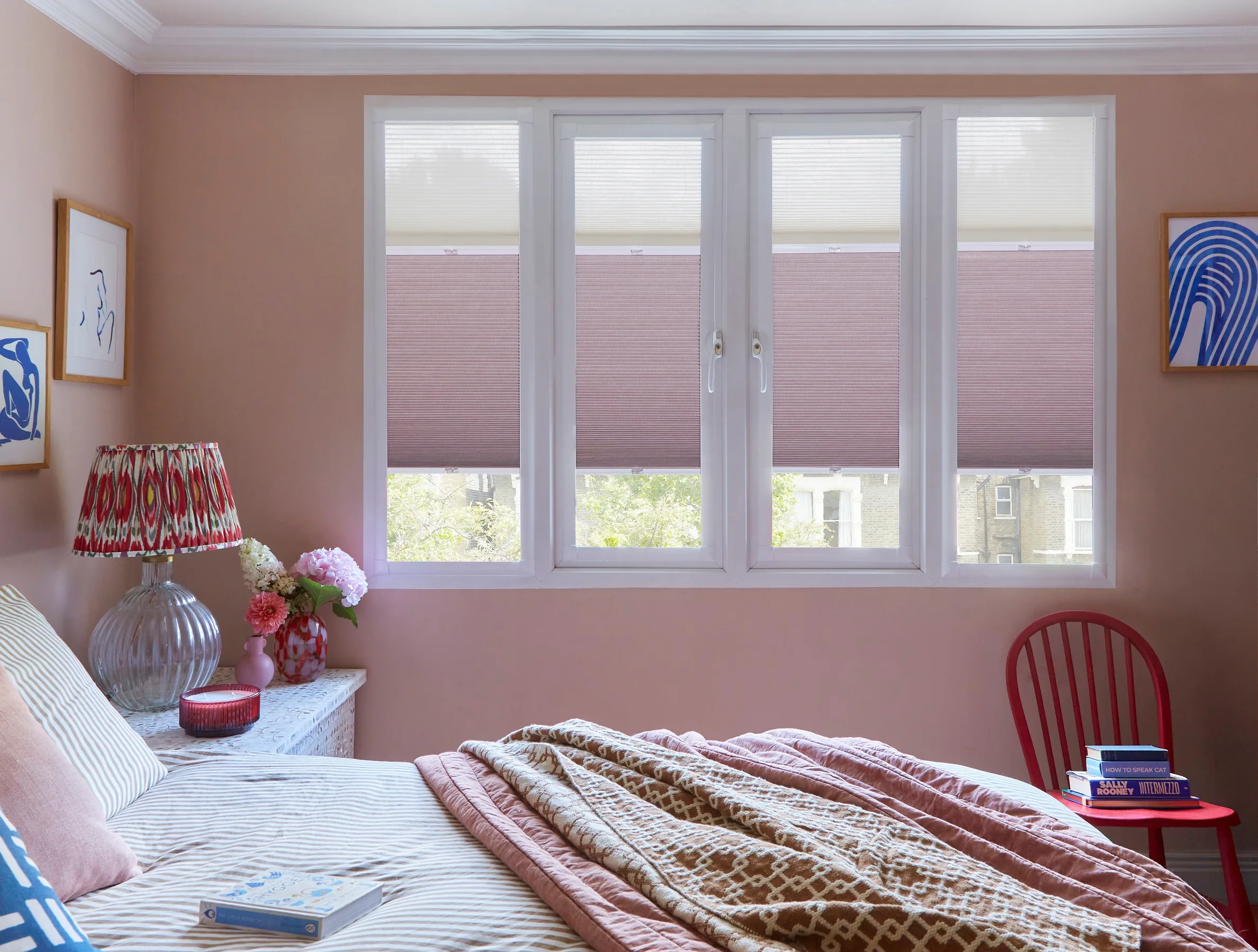
Honeycomb Blinds Keep the Bay Light
Low-profile headrails preserve glass area. The cellular fabric softens glare, and three independent blinds let privacy change across the bay through the day.
Low visual stack
Less material gathering at already-tight corners.
Softened daylight
Warm-white fabric filters glare rather than blocking the room.
Panel-by-panel control
Each face responds independently to sun and street views.
Our Process
Four Decisions, in the Right Order
Product follows geometry. Manufacture follows product. Installation follows one clearly recorded line.
Read the bay
Record each opening, angle, sill and handle projection before choosing a blind line.
Test the light
Compare fabric samples against afternoon glare and the privacy needed from the street.
Resolve the corners
Set headrail depth so adjacent blinds meet cleanly without colliding.
Fit and align
Install from one datum, test every control and confirm clear window operation.
The Result
Privacy Arrives. The Bay Still Feels Like a Bay.
Lowered, the panels read as one composed treatment. Raised, they retreat into slim headrails and return the full shape of the glazing.
“The right result is not three blinds that happen to fit. It is one bay that works as a whole.”
Daytime
Filtered light and adjustable privacy
Raised
Minimal stack and open glazing
Bay Window Questions
Solve the Shape Before Choosing the Fabric
Which blinds are suitable for a three-sided bay window?
Honeycomb, roller, Roman and Venetian blinds can all suit bay windows. Corner space, handles, sill depth and the desired stack determine which system works best.
How do you measure blinds for bay-window angles?
Each window and corner is measured individually. Projection templates and control-line dimensions help establish where adjacent headrails meet without clashing.
Can bay-window blinds provide privacy without blocking all daylight?
Yes. Light-filtering fabrics, adjustable slats or top-down systems can screen lower-level views while retaining useful natural light.
Your Bay, Measured Properly
Bring Us the Awkward Angles
A free home survey lets us resolve clearances, controls and corner intersections before anything is ordered.
Book Free Consultation